PIER Journals
PhotonIcs and Electromagnetics Research Symposium, also known as Progress In Electromagnetics Research Symposium
Featured Plans

PIERS —— A global symposium committed to
advancing photonics and electromagnetics for the benefit of humanity.

Hot Topic Speakers

All speakers and talks in the hot topic session are BY INVITATION ONLY, and will be very selective on some hot/emerging topics or disruptive technologies. Each invited speaker will be given only 10 minutes to give a big-picture or highlight talk. An invited speaker in this section may also refer to their longer talk (if any) at PIERS.

List of dates/times of hot topic talks.

* All Names of hot topic speakers are in order of accepted dates.
Prof. Sir John B. Pendry About the Speaker:
Imperial College London

[Homepage]
Sir John Pendry is Chair in Theoretical Solid State Physics at Imperial College London. He is generally regarded as the founder of the field of metamaterials, completely novel materials with properties not found in nature that owe their properties to internal structure rather than chemical composition. These materials can have remarkable properties such as negative refractive index and lenses that break the diffraction limit, enabling the realisation of a prototype cloaking device, so-called "invisibility cloaks". His most recent work --- META4D --- adds the dimension of time to their structure.
Elected a Fellow of the Royal Society in 1984, Professor Sir John Pendry has been Member of Council in 1992-1994, and Editor of the Proceedings A in 1996-2002. He was elected a Member of Council of the Institute of Physics (IOP) and Chairman of Institute of Physics Publishing in 2007-2011 and an Honorary Fellow of IOP in 2016. He was also named Fellow or Foreign Member in several professional organizations including the Optical Society of America, the American Academy of Arts and Sciences, US National Academy of Sciences, the Norwegian Academy of Science and Letters and the American Physical Society. He has received numerous honours and awards recognizing his contributions, culminating in his knighthood for services to science in 2004, and the Royal Medal of the Royal Society in 2006. He was also awarded the Isaac Newton Medal in 2013, the Kavli Prize in 2014, the Dan David Prize and Ugo Fano Gold Medal in 2016, the John Howard Dellinger Medal in 2017 and the SPIE Mozi Award in 2019. In 2024 he received the Kyoto Prize. He was Awarded the Copley Medal by the Royal Society in August 2025.

Talk Title: To Be Decided
Organized by: Prof. Sailing He
Prof. Juergen Popp About the Speaker:
Friedrich Schiller University

[Homepage]
Prof. Jürgen Popp is a scientific director of the Leibniz Institute of Photonic Technology (IPHT) in Jena, Germany. He is a member of the German Academy of Science and Engineering, a Fellow of the Society for Applied Spectroscopy and a SPIE Fellow. His research focuses on the application of spectroscopic technology for medical diagnostics. He received the Robert Kellner Lecture Award in 2013. In 2018, Popp was awarded both the Berthold Leibinger Innovation Prize and the Kaiser Friedrich Research Prize, and in 2019 the Thuringian Research Prize. In 2023, he received the Charles Mann Award from the American Federation of Analytical Chemistry and Spectroscopy Societies for outstanding contributions in the field of spectroscopy.

Talk Title: To Be Decided
Organized by: Prof. Sailing He
Prof. Junsuk Rho About the Speaker:
Pohang University of Science and Technology (POSTECH)

[Homepage]
Prof. Rho is a Yeon-San Endowed Chair Professor and Mu-Eun-Jae Endowed Chair Professor at Pohang University of Science and Technology (POSTECH), Korea, with a joint appointment in the Department of Chemical Engineering, Mechanical Engineering, and Electrical Engineering. He received his Ph.D. at the University of California, Berkeley (2013), M.S. at the University of Illinois, Urbana-Champaign (2008) and B.S. at Seoul National University, Korea (2007). Prior joining POSTECH, he conducted postdoctoral research in Materials Sciences Division & Molecular Foundry at Lawrence Berkeley National Laboratory, and also worked as a principal investigator (Ugo Fano Fellow) in Nanoscience and Technology Division & the Center for Nanoscale Materials at Argonne National Laboratory. Prof. Rho has authored and co-authored more than 450 high-impact journal papers including Science and Nature. He is also the recipients of several notable honors and awards such as US Department of Energy Argonne Named fellowship (2014), Korean Presidential Early Career Award for Scientists and Engineers (2019), Member of the Young Korean Academy of Science and Technology (Y-KAST) (2020), Associate Member of the National Academy of Engineering of Korea (NAEK) (2022), Fulbright Visiting Scholar Fellowship (2022), Northwestern Simpson Fellowship (2022), Clarivate Highly Cited Researcher (2023, 2024), Elsevier/Stanford World Top 2% Scientist (2021-2025), ACS Nano Lectureship (2024).

Organized by: Prof. Sailing He
Prof. Zhong Lin Wang About the Speaker:
Beijing Institue of Nanoenergy and Nanosystems, Chinese Academy of Sciences

[Homepage]
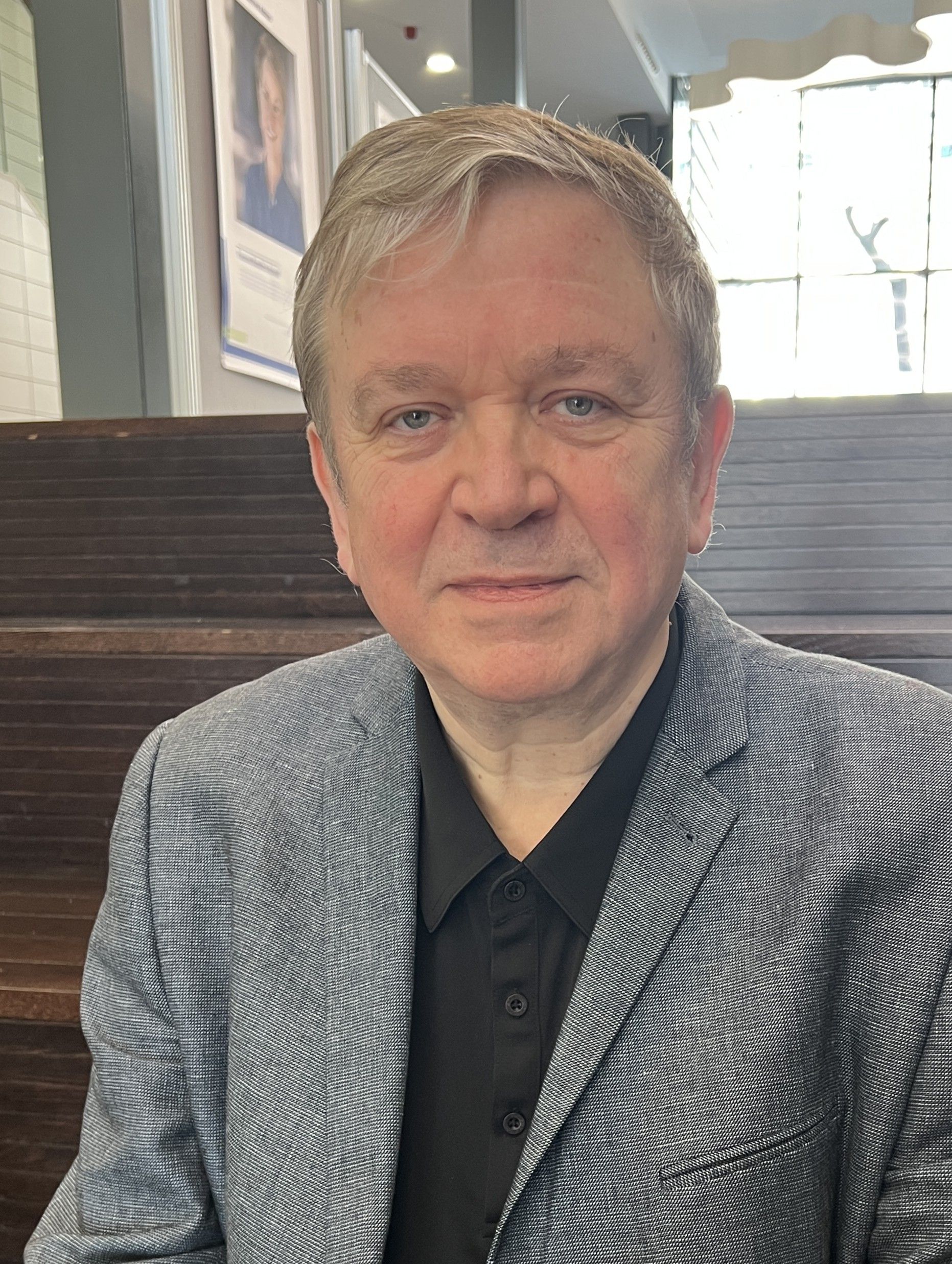
Dr. Zhong Lin Wang is a preeminent physicist and materials scientist whose groundbreaking work has revolutionized the fields of nanotechnology, energy harvesting, and self-powered systems. He currently serves as the Director of the Beijing Institute of Nanoenergy and Nanosystems and holds the distinguished titles of Regents' Professor and Hightower Chair (Emeritus) at the Georgia Institute of Technology. Dr. Wang is widely recognized as the pioneer of the nanogenerators field, which has enabled advancements in distributed energy, self-powered sensors, and large-scale blue energy. Additionally, he coined and developed the fields of piezotronics and piezo-phototronics, which have significant implications for third-generation semiconductors.
Dr. Wang's scientific impact is unparalleled. Among 230,000 scientists across all fields worldwide (Top 2%)as ranked by Elsevier and Stanford, he is ranked #1 simultaneously for career-long scientific impact and single-year scientific impact consecutively from 2019-2024. He is also ranked #1 respectively in Materials Science and nanotechnology. His research has garnered over 510,000 citations on Google Scholar, with an extraordinary h-index of 340, underscoring his immense influence and contributions to science.
Throughout his illustrious career, Dr. Wang has received numerous prestigious awards, including the Global Energy Prize (2023), the Albert Einstein World Award of Science (2019), the ENI Award in Energy Frontiers (2018), the James C. McGroddy Prize in New Materials from the American Physical Society (2014), and the MRS Medal from the Materials Research Society (2011). His groundbreaking work has earned him memberships and fellowships in some of the world’s most esteemed scientific academies, including the UK Royal Academy of Engineering, the Chinese Academy of Sciences, US National Academy of Inventors, the European Academy of Sciences, the European Academy of Engineering, the Korea Academy of Science and Technology (as a foreign member), the Academia Sinica, and the Canadian Academy of Engineering (as an International Fellow).
Wang's pioneering contributions to nanogenerators, piezotronics, and self-powered systems have not only advanced fundamental science but also paved the way for transformative technologies in energy harvesting, sensing, and semiconductor development. His exceptional scientific impact, numerous accolades, and leadership in the global scientific community underscore his status as one of the most influential materials scientists of our time.

Organized by: Prof. Sailing He
Prof. Lihong Wang About the Speaker:
California Institute of Technology

[Homepage]
Lihong Wang, the Andrew and Peggy Cherng Medical Engineering Leadership Chair and the Bren Professor of Medical Engineering and Electrical Engineering at Caltech, who is also the executive officer for medical engineering at Caltech, is a recognized leader in the field of biomedical imaging. His group has developed a variety of imaging techniques, including compressed ultrafast photography --- a technique that enabled the world's fastest camera, which can now capture 210 trillion frames per second. Prof. Wang is particularly well known for the development of 3D photoacoustic imaging that allows researchers to see into biological tissues noninvasively, and to peer deeper into the body by nearly two orders of magnitude compared to conventional optical microscopy. Prof. Wang is also pushing what is possible in the field of quantum imaging, gaining higher-resolution images of biological materials by taking advantage of the unique quantum properties of light.
Among his numerous honors, Wang has been the recipient of a National Science Foundation CAREER award; and, from the National Institutes of Health (NIH), the FIRST, Director's Pioneer, Director's Transformative Research, and NIH/National Cancer Institute Outstanding Investigator awards. He also received the C.E.K. Mees Medal from the Optical Society of America (OSA, now Optica), a Technical Achievement Award from the Institute of Electrical and Electronics Engineers (IEEE), an IEEE Biomedical Engineering Award, SPIE Britton Chance Biomedical Optics Award, a Senior Prize from the International Photoacoustic and Photothermal Association, and an OSA Michael S. Feld Biophotonics Award. He is a fellow of the American Association for the Advancement of Science, the American Institute for Medical and Biological Engineering, the Electromagnetics Academy, the International Academy of Medical and Biological Engineering, and the IEEE, OSA, and SPIE. He is a Foreign Fellow of the Chinese Optical Society. An honorary doctorate was conferred on him by Lund University, Sweden. In 2018, he was inducted into the National Academy of Engineering, and in 2020, he was named to the National Academy of Inventors. Wang was also honored in 2024 with a special issue of the Journal of Biomedical Optics. He was elected to the National Academy of Medicine (NAM) in 2025.

Organized by: Prof. Sailing He
Prof. Nikolay I. Zheludev About the Speaker:
University of Southampton

[Homepage]
Nikolay I. Zheludev FRS NAE is Professor of Physics and Deputy Director of the Optoelectronics Research Centre at the University of Southampton, UK. He is a Hagler Fellow at the Hagler Institute for Advanced Study, Texas A&M University, USA, and a Distinguished Fellow of the Institute of Advanced Studies at Nanyang Technological University, Singapore. He is a Fellow of the Institute of Physics UK, American Physical Society, European Physical Society, and Optica. He was elected Fellow of the Royal Society in 2018 and a Member of the US National Academy of Engineering in 2019.
Zheludev is a founding contributor to the closely interconnected fields of metamaterials and nanophotonics, which emerged at the intersection of optics and nanotechnology in the early 21st century. His research spans photonic and microwave metamaterials, plasmonics, toroidal electrodynamics, optical superoscillations, time crystals and optical metrology.
His honours include the European Physical Society Quantum Electronics Prize (2025), the Institute of Physics Singapore President’s Gold Medal (2023), the Michael Faraday Medal and Prize (2022), the President of Singapore Science and Technology Award (2020), and the Thomas Young Medal and Prize (2015). He has also received the Leverhulme Trust Senior Research Fellowship (2000), an EPSRC Senior Research Professorship (2002), and the Royal Society Wolfson Research Merit Award (2009).

Organized by: Prof. Sailing He
Dr. Rachel Pei Chin Won About the Speaker:
Nature Reviews Electrical Engineering

[Homepage]
Rachel received her Bachelor Degree in Mechanical Engineering and Material Science from the National University of Malaysia, and her Master Degree in Mechanical and Production Engineering from Nanyang Technological University of Singapore, where she conducted research in optical fibre sensing. She worked as an Optics Engineer in the Optical Storage R&D Department of Philips Electronics Singapore before pursuing a PhD in Engineering at Aston University, UK, focusing on microwave photonics and nonlinear optics. After completing her PhD, she joined Aston University's Business Partnership Unit as a Medici Fellow, working on the commercialization of the university's research outputs. Rachel began her editorial career in June 2006 as a Founding Editor of Nature Photonics, later becoming the journal’s Chief Editor from 2011-2014 and International Editor from 2014. In July 2025, she was appointed Chief Editor of Nature Reviews Electrical Engineering. She is also an elected Fellow of both OPTICA and the International Society of Optics and Photonics (SPIE). She is based in London.

Organized by: Prof. Sailing He

Contact us

Inquiry about paper submission, registration, and program schedule, please email to:
PIERS OFFICE: office@piers.org and/or piers@emacademy.org

Usually, inquiry to PIERS OFFICE will be replied within 1-2 working days. If you cannot get reply timely, please keep trying both emails, or change another email account to contact us to avoid the unpredictable email correspondence problem between us.

Inquiry about visa, hotels and other locale information, please email to:
Secretariat for PIERS 2026 Suzhou: piers2026_suzhou@126.com

Sponsors